
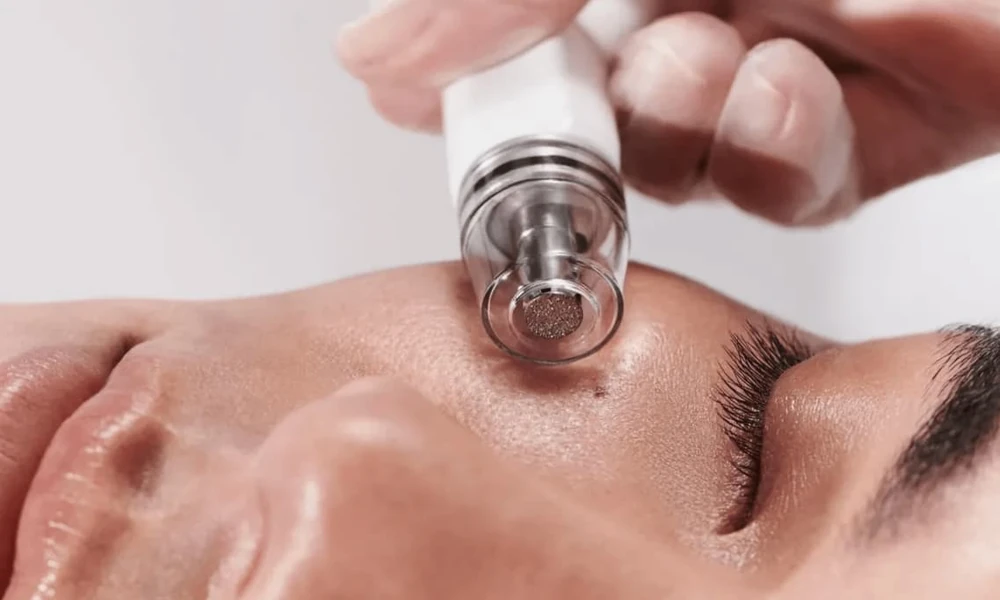
Most people book their first DiamondGlow because a friend’s skin looked suspiciously good at brunch. That’s a fine reason. But the treatment earns repeat visits for a duller, realer reason: it handles the two things your at home routine can’t, which are physical exfoliation and deep extraction, in about 40 minutes with zero downtime.
If you’re in the Atlanta metro or anywhere around Athens, you’ve got options, and not all of them are equal. The device itself is only half the equation. What matters more is who’s holding the wand and what they put on your face after. A Diamond Glow facial in Georgia at a dermatology practice tends to look different from one at a strip mall med spa, mostly because a medical team can look at your skin and tell you whether you actually need something stronger.
Here’s what the treatment does, what it costs, and how to tell whether it’s worth your Saturday.
What Actually Happens During a DiamondGlow Facial
DiamondGlow, formerly branded Dermalinfine, uses a handheld wand with a diamond encrusted tip. The tip abrades the top layer of dead skin while a vacuum simultaneously suctions the loosened cells away. Then the same wand pushes a serum of your provider’s choosing back into the freshly opened surface.
Three actions happen in one pass: exfoliate, extract, infuse. That’s different from a classic facial, where an esthetician steams your face, extracts blackheads by hand, and then massages in products that mostly sit on top of your skin. Extractions by hand hurt. DiamondGlow’s vacuum is gentler and covers more ground in less time.
Two things surprise first timers. First, the suction is louder than it feels, so don’t flinch at the noise. Second, you leave with slightly pink skin that fades within a few hours. I’ve watched people walk straight from a lunchtime appointment back into a client meeting with nothing but a little extra color.
Sessions run 30 to 45 minutes depending on how many serum passes you get and how much time your provider spends on problem zones.
Who Gets the Most Out of It
DiamondGlow plays best with congested, textured, or dull skin. If you’ve got visible blackheads across your nose, a rough patch of dead cells that your moisturizer can’t penetrate, or skin that looks tired no matter how much water you drink, this is your treatment.
It’s also a smart pick before a big event, since there’s no peeling and no recovery period. Brides in this state book it about a week out from the wedding, which gives any post treatment redness time to settle and gives the glow a couple of days to actually show up.
Where it does less: deep acne scarring, significant sun damage, and laxity. You’d want microneedling, laser, or a resurfacing option instead, and a dermatologist is the right person to tell you which. According to the American Cancer Society, skin cancer is the most commonly diagnosed cancer in the United States, which is a roundabout way of saying that anyone doing regular cosmetic treatments on your skin should also be watching your skin for things that aren’t cosmetic. An esthetician at a spa can’t do that. A dermatology practice can.
What a DiamondGlow Facial Costs in Georgia
Pricing swings a lot depending on where you book. Here’s the honest landscape:
| Setting | Typical Per Session Range | What You’re Paying For |
|---|---|---|
| Medical spa or dermatology practice | $150 to $300 | Provider oversight, medical grade serums, skin checks |
| Independent day spa | $150 to $250 | Relaxation, ambience, shorter treatment time |
| Package of three or more | Often 10 to 20 percent off | Consistent scheduling, better cumulative result |
Don’t read that table as “cheaper is worse.” Plenty of excellent estheticians work solo. Read it as: check whether a physician or nurse is on site, and ask which serum they plan to use and why. If nobody can answer that question with a reason tied to your skin, keep looking. That single question will tell you more than any review page will.
A Simple Routine Around Your Appointments
You’ll get better results if your at home habits support the treatment instead of fighting it. Here’s the sequence I’d hand a friend:
- Ten days before: pause retinoids and any at home acids. Your provider will tell you exactly how long, and you should follow their number over mine.
- Three days before: skip waxing, threading, and sun exposure on the treatment area.
- Day of: arrive with a clean face. No makeup, no sunscreen applied that morning if you can help it.
- First 24 hours: moisturizer and sunscreen only. Your barrier is temporarily more open than usual. The Centers for Disease Control and Prevention has straightforward guidance on sun protection, and it applies double here.
- Days two through seven: reintroduce gentle cleanser, then actives one at a time. Don’t stack everything back on night one.
How often? Every four to six weeks works for most people, which lines up with how fast skin cells turn over. If you’re prepping for an event, one session a month for three months beats three sessions crammed into one week. Your skin needs the gap to respond.
The Part Nobody Mentions
DiamondGlow is a maintenance treatment, not a fix. It won’t erase a decade of sun damage in one visit, and anyone promising that is selling you something else. What it does is keep your surface clear enough that the products you already own can finally do their job. That’s a quieter win than a dramatic before and after photo, and it’s the reason people keep booking.
One more thing worth knowing: the infusion serum is where the real variation lives. Some providers use a basic hydrating blend on everyone. Better ones match the serum to what they see on your face that day, whether that’s brightening, calming, or clarifying. Ask. It’s your skin, and the question is fair.
Skin type matters too. The National Institutes of Health notes that skin structure and behavior vary across populations, which is a clinical way of saying that a treatment protocol built for one complexion isn’t automatically right for another. If your provider adjusts pressure and serum based on your skin tone and sensitivity rather than running the same script on everyone, that’s a good sign.
Deciding Whether to Book
Book the appointment if you want brighter, smoother skin with no downtime and you’re willing to commit to a schedule instead of a one off. Skip it if you’re chasing scar revision or firmness, because you’d be paying for the wrong tool.
Ask three questions before you commit: who’s performing the treatment, what serum they’ll use, and how many sessions they’d realistically recommend for your goal. Clear answers to all three mean you’ve found the right room. Vague answers mean you haven’t.
And once you’re in the chair, look at the plan as a season, not a single afternoon. What’s the one skin habit you’d actually keep for six months if you knew it would show?