
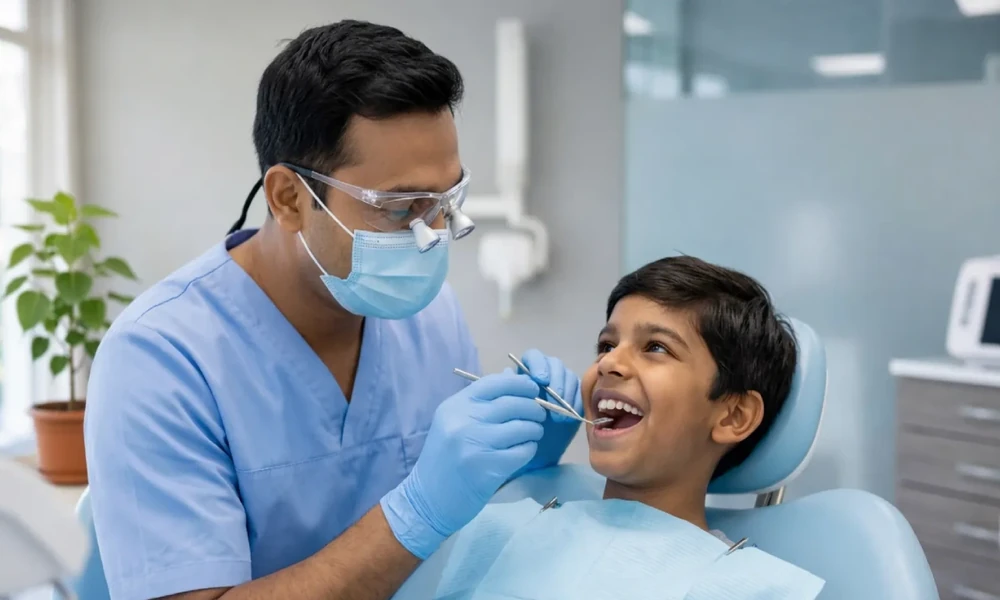
You may have been told your child needs sealants, or you may be weighing a filling for yourself, and then one phrase stops you cold: BPA. That moment can bring a rush of second guessing. You want teeth protected. You also do not want to trade one concern for another. That tension is real, especially when product labels and dental terms are hard to sort through. A family dentist in Hopkins, MN can help you understand your options with confidence.
The short version is this: dental sealants and restorative materials can differ in how they are made, and some resin based products may contain BPA related compounds rather than BPA itself. The amount of BPA exposure linked to dental materials appears to be low and often brief, but if you want to reduce exposure where possible, you can ask for BPA conscious dental sealants and discuss material choices before treatment. A dentist who takes time with prevention and material selection can help you balance cavity protection, durability, and peace of mind.
Dental sealants and restorative materials are not all the same
It helps to separate two things that often get lumped together. Sealants are thin coatings placed on chewing surfaces, usually to prevent decay in grooves that are hard to clean. Fillings and other restorative materials repair damage that is already there. Both can be made from different classes of materials, and that is where the BPA concern usually starts.
Many people hear “plastic” or “resin” and assume every product carries the same risk. It does not work that way. Some resin based dental materials are made with compounds such as Bis GMA or Bis DMA. Research has looked at whether tiny amounts of BPA can be released from certain materials, especially right after placement. The larger picture from public health sources is reassuring, but it is still fair to want lower exposure when you have options.
The National Institute of Dental and Craniofacial Research explains that dental sealants are a proven tool for preventing cavities, especially in children. That matters because untreated decay has its own costs. Pain, infection, lost school time, repeated visits, and larger restorations later all carry a burden that families know well.
The BPA issue gets more stressful when the conversation feels rushed. If you are already anxious about treatment, hearing “it’s probably fine” without details can feel dismissive. You may be thinking, probably is not the word I wanted to hear while someone is choosing a material that will sit in a tooth.
BPA concerns are understandable, and context matters
BPA is a chemical used in some plastics and resins, and it has been studied for possible effects on health. The National Institute of Environmental Health Sciences provides a clear overview of BPA and why people try to limit exposure. In dentistry, the key point is that concern often centers on trace exposure from specific resin based materials, not on every sealant or filling across the board.
That distinction matters in real life. A child with deep grooves and a history of cavities may benefit a lot from sealants. An adult with a small cavity may be choosing between a resin composite, a glass ionomer material, or another option depending on the tooth, the bite, moisture control, and appearance. The right answer is rarely one size fits all.
There is also active work to improve dental materials. The NIDCR highlights ongoing dental materials research focused on safety, strength, and performance. That is good news if you want options that respect both oral health and exposure concerns.
BPA conscious material choices can support both prevention and repair
If you want a more low BPA dental materials approach, the conversation usually includes whether a resin free or lower exposure alternative fits the job. Glass ionomer materials, for example, are often part of that discussion. They can release fluoride and may be useful in some sealants and restorations, though they may not always match resin composites for wear resistance in every situation.
A small child who struggles to sit still, a back tooth under heavy chewing force, and a dry, easy to isolate tooth each create different conditions. That is why material choice is not just about ingredients on a list. It is also about whether the material can last in that mouth, on that tooth, under those conditions. A failed restoration means another replacement cycle, and that has its own cost and stress.
Comparing BPA conscious options for dental sealants and restorative materials
| Material type | Common use | BPA concern level | Strengths | Limits |
|---|---|---|---|---|
| Resin based sealant | Cavity prevention in deep grooves | May involve BPA related compounds depending on product | Strong retention, common preventive choice | Requires careful placement and dry field |
| Glass ionomer sealant | Preventive sealant, often when moisture control is harder | No direct BPA resin concern in the same way as resin based products | Fluoride release, useful in some situations | May wear faster than resin sealants |
| Resin composite filling | Tooth colored restoration | Product specific discussion needed | Esthetic, widely used, bonds to tooth | Technique sensitive, not every product is equal |
| Glass ionomer restoration | Small restorations, temporary or selected permanent uses | Often chosen by patients seeking BPA free dental fillings discussions | Fluoride release, useful in selected cases | Less wear resistance in some high stress areas |
Clear steps help you make a calmer decision
Ask for the exact material name before treatment. General phrases like “white filling” or “sealant” are not enough. Ask what product is planned, whether it is resin based, and whether the office offers alternatives for patients who want BPA conscious choices.
Match the material to the tooth, not just the worry. A preventive coating on a child’s molar, a front tooth chip, and a load bearing back tooth all call for different thinking. Ask why that material is being recommended for that specific spot, and what tradeoffs come with the other options.
Reduce avoidable exposure around placement. If a resin based material is used, ask about polishing and rinsing after placement, since any trace release is thought to be highest shortly after the procedure. Good isolation, careful curing, and finishing also matter for performance and cleanliness.
A thoughtful dentist can help you protect teeth without brushing aside your concerns
You do not have to choose between being cautious and being practical. You can care about cavity prevention and still ask detailed questions about materials. You can want durability and still prefer a more general dentist material safety discussion before treatment starts.
If you are looking for a Holistic General Dentist, ask for a consultation focused on sealants, fillings, and material options that fit your health priorities. A calm, specific conversation is often what turns a stressful decision into a clear one.